by Trevor Foley
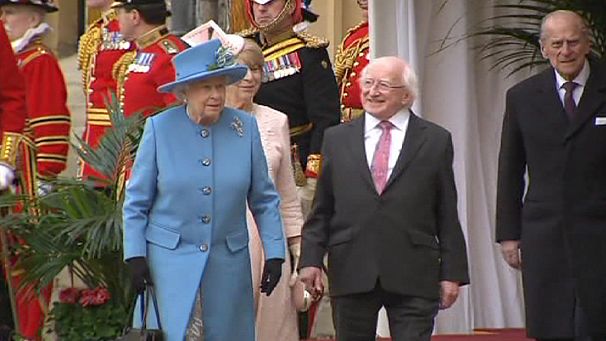
Ready for some action? This September, a referendum in Scotland will be held that will decide whether or not Scotland should become its own independent country or secede from the United Kingdom. No doubt, anyone with even a remote interest in European Politics has had their eyes fixed on the United Kingdom in the last couple of years, and for good reason! While the idea of Scottish independence from Great Britain, and a peace between England and Northern Ireland have certainly existed for a long time; we have seen the progress in the realization of these two goals speed up because of recent events between Britain and Scotland, and Britain and Ireland respectively. Ireland is close second in hot topics in Europe these days. Historic visits by the Queen of England to Ireland and the President of Ireland to England have served as huge symbolic peace gestures between England and Northern Ireland; two entities that were once involved in brutally violent conflict with each other.
How does language play a role in these situations? In the case of Northern Ireland, we can see the importance of both functional aspects of language at play: as a means of communication within and between nations and as a symbol of personal identification to one’s nationality. On what was considered a groundbreaking Northern Irish peace visit to Ireland in May of 2011, the Queen of England participated in many symbolic events in an effort to show Northern Ireland and England coming together. She laid a wreath at memorial garden to Irish nationalists that died in the fight for Independence from Britain and the Queen spoke a few words in Irish Gaelic in a speech she made at a state dinner in Dublin Castle. While it was only a few words, this small gesture played a big role in advancing the progress towards Northern Irish peace. As we can see from the study completed by Máiréad Moriarty (Moriarty 2010) on the Irish and Basque languages, the Irish language is an important marker of ethnic nationality to those native citizens of Ireland. By speaking these few words in Irish, the Queen recognized the importance of the Irish language, culture, and people. By so doing, the Queen reached across to the Irish nationalists in a positive and uplifting manner. Similarly, when Irish President Michael Higgins made his historic visit to England this last weekend, the Buckingham Palace twitter page released a tweet welcoming President Higgins to England. What makes this welcoming gesture important is that the tweet was written in the Irish language. Again, England’s government officials recognized the importance of the Irish language, culture, and people.
When the roles were reversed and President Higgins made a historic speech to the British Parliament, his speech was ripe with good will gestures as well. First, his entire speech was in the language of England, English. While this seems obvious because of English’s dominance in both countries, it still plays an important symbolic role. In an effort to separate Ireland from England, he could have given his speech before Parliament in Irish Gaelic and those listening could have used translation technology. However; he did not, this automatically makes his speech more personal to the people of England and helps bring the two countries together even better. Besides the choice of language, what was distinctive about his speech was the content that made up the speech. In his address, President Higgins makes comments about the great strides the two have made in coming towards a full and lasting peace. He also talked about just how closely connected the two countries have been throughout history. Finally, and most importantly, he pointed out that while great strides have been made there is still a road to be traveled towards a full reconciliation and that Northern Ireland and England have a SHARED responsibility in navigating it. By recognizing a shared responsibility, President Higgins did no blaming of either side and positively encouraged both countries to work together to recognize their differences in creating peace. This discourse is very similar to a couple tenets of the Preamble to the European Charter on Regional and Minority Languages. Those tenets being that the Charter is meant to encourage cultural diversity and building greater unities between countries. Looking forward to the future of Scottish Independence, it will be interesting to see if the use of language is as important in the case as that of the Northern Ireland peace.
Video for Blog:
http://www.theguardian.com/world/video/2014/apr/08/irish-president-michael-higgins-british-parliamentary-address-video
Sources:
http://www.theguardian.com/commentisfree/2014/apr/11/irish-state-visit-public-theatre-common-culture
http://www.bbc.com/news/uk-northern-ireland-26912361
https://twitter.com/BritishMonarchy/status/453488898979934208
Trevor Foley was a senior, majoring in Political Science and minoring in History at the University of Illinois. Trevor was planning on entering the U.S. Air Force as an Intelligence Officer in the spring of 2014 when he wrote this in PS/LING/FR 418, Language and Minorities in Europe.
 |
| President Higgins and the Queen together in England Image Source |
 |
| Queen lays wreath Image Source |

How does language play a role in these situations? In the case of Northern Ireland, we can see the importance of both functional aspects of language at play: as a means of communication within and between nations and as a symbol of personal identification to one’s nationality. On what was considered a groundbreaking Northern Irish peace visit to Ireland in May of 2011, the Queen of England participated in many symbolic events in an effort to show Northern Ireland and England coming together. She laid a wreath at memorial garden to Irish nationalists that died in the fight for Independence from Britain and the Queen spoke a few words in Irish Gaelic in a speech she made at a state dinner in Dublin Castle. While it was only a few words, this small gesture played a big role in advancing the progress towards Northern Irish peace. As we can see from the study completed by Máiréad Moriarty (Moriarty 2010) on the Irish and Basque languages, the Irish language is an important marker of ethnic nationality to those native citizens of Ireland. By speaking these few words in Irish, the Queen recognized the importance of the Irish language, culture, and people. By so doing, the Queen reached across to the Irish nationalists in a positive and uplifting manner. Similarly, when Irish President Michael Higgins made his historic visit to England this last weekend, the Buckingham Palace twitter page released a tweet welcoming President Higgins to England. What makes this welcoming gesture important is that the tweet was written in the Irish language. Again, England’s government officials recognized the importance of the Irish language, culture, and people.
 |
| President Higgins shortly after address to Parliament Image Source |

Video for Blog:
http://www.theguardian.com/world/video/2014/apr/08/irish-president-michael-higgins-british-parliamentary-address-video
Sources:
http://www.theguardian.com/commentisfree/2014/apr/11/irish-state-visit-public-theatre-common-culture
http://www.bbc.com/news/uk-northern-ireland-26912361
https://twitter.com/BritishMonarchy/status/453488898979934208
Trevor Foley was a senior, majoring in Political Science and minoring in History at the University of Illinois. Trevor was planning on entering the U.S. Air Force as an Intelligence Officer in the spring of 2014 when he wrote this in PS/LING/FR 418, Language and Minorities in Europe.
Comments
Post a Comment
The moderators of the Linguis Europae blog reserve the right to delete any comments that they deem inappropriate. This may include, but is not limited to, spam, racist or disrespectful comments about other cultures/groups or directed at other commenters, and explicit language.