Spanish, Catalan, or Both? Language Uses and Identities in the Autonomous Community of Catalonia, Spain
by Karol Funez
Karol Funez is a senior in Political Science and Global Studies at The University of Illinois. Karol is planning to work in sales after graduation and is interested in Law, she hopes to attend law school in the near future. She wrote this blog post in 418 'Language and Minorities in Europe' course, in spring 2019. 
One of the best-known and highest ranked soccer teams in the world; known for having soccer players such as Lionel Messi; is the Football Club Barcelona (FC Barcelona). My family follows Spain’s soccer league very closely and, naturally, are huge fans of FC Barcelona. Usually, both, before and after soccer matches, the soccer players will have either press conferences or interviews. As a Spanish speaker myself, I would notice when soccer players would switch from Spanish to a language that sounded like Spanish but was not. I later learned that this language is called Catalan. Catalan is a Romance language that developed two thousand years ago and remains prevalent in Spain despite different efforts to supersede it.
The official state language of Spain is Castilian, but the 1978 Constitution also grants co-officiality to minority languages in autonomous communities (Ros, Ignacio Cano, & Huici, 1987). Catalan is one of the minority languages spoken in Spain, and it is the official language in the autonomous communities of Catalonia (Huguet & Llurda, 2001). Today, there are over 6 million people who speak Catalan (Ros, et al., 1987). They reside mostly, in Catalonia’s four provinces: Barcelona (the capital), Tarragona, Girona, and Lleida.
During Francisco Franco’s rule, there was a high level of Diglossia between the Castilian and Catalan languages. Diglossia refers to a situation when two languages are spoken under different circumstances. Castilian was the language of, “education, administration, and legislation, while the use of other languages was restricted to informal contexts like family” (Ros, et al., 1987). Catalan suffered greatly during this time, but the restoration of democracy in 1977 allowed Catalan to slowly move from being used in informal contexts to more formal contexts. In addition, during this time, Catalonia gained political autonomy.
This political autonomy allowed Catalonia to start normalizing the language at an institutional level, such as in administration and mass media (Ros, et al., 1987). This normalization allowed Catalan to survive and grow to its levels of sociolinguistic vitality today. Most citizens of the Catalonia community identify themselves as Catalans and believe that using and conserving Catalan is essential for their identity. However, Castilian remains the national language of Spain, therefore Catalans are forced to use both languages.
According to Ros, Ignacio Cano, & Huici (1987), “Castilian holds the dominant position [in Spain], followed by Catalan,” though Catalan has a strong vitality. For example, Catalan speakers have a stronger linguistic competence than those of other communities such as Basque or Valencian, in that Catalans use their language more often whether it is written or orally (Ros, et al., 1987). Catalans not only use their language more, but Catalan is the second most used language in Spain following Castilian (Ros, et al., 1987). It has also been found that Catalan speaker’s attitudes towards Castilian or Catalan is, “consistent, preferring Catalan to Castilian” (Ros, et al., 1987). This data suggests that Catalans’ language is very important to their social identity and it emphasizes how established Catalan is in social contexts.
To further understand the language preference of people in the communities of Catalonia, Huguet & Llurda (2001), investigated the attitudes of school children towards Catalan and Spanish by studying two autonomous communities in Spain: Catalonia and Aragon. Catalonia, as we know, is bilingual, and, people speak Spanish and Catalan. Aragon is mostly monolingual, but two geographic areas in Aragon are considered bilingual (Huguet & Llurda, 2001). The study in these two communities consisted of a "questionnaire on the attitudes of school children… to detect any attitudinal differences towards Catalan and Spanish” (Huguet & Llurda, 2001). The results found, “an overall dominance of favorable attitudes towards both languages” (Huguet & Llurda, 2001). This study shows how school children in the two Catalan/Spanish bilingual communities have favorable attitudes when using either Castilian or Catalan.
The survival of Catalan even after the 1939-1975 dictatorship is surprising, especially after the immigration of immigrants from other parts of Spain and most recently the immigration of Latin Americans to the Catalonia region. Immigrants from other parts of Spain prefer Castilian but are forced to learn Catalan (Trench-Parera & Newman 2009). Furthermore, immigrants from Latin American countries identify more and prefer their Latino roots over Spanish or Catalan. Between the extremes of Linguistic Cosmopolitanism, “support for bilingualism and preference for linguistic crossing,” and Linguistic Parochialism that is, “supportive of monolingualism”, both immigrant groups "show attitudes that are at least partially cosmopolitan" (idem). This demonstrates how Catalan has a strong social vitality, as it shows that even immigrants had to become accustomed to the use of the language.
The official state language of Spain is Castilian, but the 1978 Constitution also grants co-officiality to minority languages in autonomous communities (Ros, Ignacio Cano, & Huici, 1987). Catalan is one of the minority languages spoken in Spain, and it is the official language in the autonomous communities of Catalonia (Huguet & Llurda, 2001). Today, there are over 6 million people who speak Catalan (Ros, et al., 1987). They reside mostly, in Catalonia’s four provinces: Barcelona (the capital), Tarragona, Girona, and Lleida.
During Francisco Franco’s rule, there was a high level of Diglossia between the Castilian and Catalan languages. Diglossia refers to a situation when two languages are spoken under different circumstances. Castilian was the language of, “education, administration, and legislation, while the use of other languages was restricted to informal contexts like family” (Ros, et al., 1987). Catalan suffered greatly during this time, but the restoration of democracy in 1977 allowed Catalan to slowly move from being used in informal contexts to more formal contexts. In addition, during this time, Catalonia gained political autonomy.
This political autonomy allowed Catalonia to start normalizing the language at an institutional level, such as in administration and mass media (Ros, et al., 1987). This normalization allowed Catalan to survive and grow to its levels of sociolinguistic vitality today. Most citizens of the Catalonia community identify themselves as Catalans and believe that using and conserving Catalan is essential for their identity. However, Castilian remains the national language of Spain, therefore Catalans are forced to use both languages.
According to Ros, Ignacio Cano, & Huici (1987), “Castilian holds the dominant position [in Spain], followed by Catalan,” though Catalan has a strong vitality. For example, Catalan speakers have a stronger linguistic competence than those of other communities such as Basque or Valencian, in that Catalans use their language more often whether it is written or orally (Ros, et al., 1987). Catalans not only use their language more, but Catalan is the second most used language in Spain following Castilian (Ros, et al., 1987). It has also been found that Catalan speaker’s attitudes towards Castilian or Catalan is, “consistent, preferring Catalan to Castilian” (Ros, et al., 1987). This data suggests that Catalans’ language is very important to their social identity and it emphasizes how established Catalan is in social contexts.
To further understand the language preference of people in the communities of Catalonia, Huguet & Llurda (2001), investigated the attitudes of school children towards Catalan and Spanish by studying two autonomous communities in Spain: Catalonia and Aragon. Catalonia, as we know, is bilingual, and, people speak Spanish and Catalan. Aragon is mostly monolingual, but two geographic areas in Aragon are considered bilingual (Huguet & Llurda, 2001). The study in these two communities consisted of a "questionnaire on the attitudes of school children… to detect any attitudinal differences towards Catalan and Spanish” (Huguet & Llurda, 2001). The results found, “an overall dominance of favorable attitudes towards both languages” (Huguet & Llurda, 2001). This study shows how school children in the two Catalan/Spanish bilingual communities have favorable attitudes when using either Castilian or Catalan.
The survival of Catalan even after the 1939-1975 dictatorship is surprising, especially after the immigration of immigrants from other parts of Spain and most recently the immigration of Latin Americans to the Catalonia region. Immigrants from other parts of Spain prefer Castilian but are forced to learn Catalan (Trench-Parera & Newman 2009). Furthermore, immigrants from Latin American countries identify more and prefer their Latino roots over Spanish or Catalan. Between the extremes of Linguistic Cosmopolitanism, “support for bilingualism and preference for linguistic crossing,” and Linguistic Parochialism that is, “supportive of monolingualism”, both immigrant groups "show attitudes that are at least partially cosmopolitan" (idem). This demonstrates how Catalan has a strong social vitality, as it shows that even immigrants had to become accustomed to the use of the language.
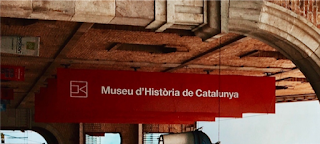 |
Museu d’ Historia de Catalunya, in Barcelona, Spain. March, 3rd, 2018. |
Despite the fact that Catalan went through a period of diglossia during Franco’s 1939-1975 dictatorship, Catalan has persevered against all odds. Catalan remains a strong factor of social identity for Catalonia. With the efforts from the Catalan government to normalize Catalan after democracy was reestablished, Catalan was able to remain prestigious. Today, Catalan is used so much in administration and mass media. Even my family from Chicago, that are across the world and unaware of Catalonia, get to hear Catalan through interviews conducted and anthem when they watch a FC Barcelona’s soccer match.
References
Àngel Huguet & Enric Llurda (2001) Language Attitudes of School Children in two Catalan/Spanish Bilingual Communities, International Journal of Bilingual Education and Bilingualism, 4:4, 267-282, DOI: 10.1080/13670050108667732
Mireia Trenchs-Parera & Michael Newman (2009) Diversity of language ideologies in Spanish-speaking youth of different origins in Catalonia, Journal of Multilingual and Multicultural Development, 30:6, 509-524, DOI: 10.1080/01434630903147914
Ros, M., Ignacio Cano, J., & Huici, C. (1987). Language and Intergroup Perception in Spain. Journal of Language and Social Psychology, 6(3–4), 243 259. https://doi.org/10.1177/0261927X8763007
References
Àngel Huguet & Enric Llurda (2001) Language Attitudes of School Children in two Catalan/Spanish Bilingual Communities, International Journal of Bilingual Education and Bilingualism, 4:4, 267-282, DOI: 10.1080/13670050108667732
Mireia Trenchs-Parera & Michael Newman (2009) Diversity of language ideologies in Spanish-speaking youth of different origins in Catalonia, Journal of Multilingual and Multicultural Development, 30:6, 509-524, DOI: 10.1080/01434630903147914
Ros, M., Ignacio Cano, J., & Huici, C. (1987). Language and Intergroup Perception in Spain. Journal of Language and Social Psychology, 6(3–4), 243 259. https://doi.org/10.1177/0261927X8763007
Comments
Post a Comment
The moderators of the Linguis Europae blog reserve the right to delete any comments that they deem inappropriate. This may include, but is not limited to, spam, racist or disrespectful comments about other cultures/groups or directed at other commenters, and explicit language.